Basement moisture • 4 min read
Water in the basement after rain: what to check first
The most useful clue is not just that the basement is wet. It is where the water appears, when it arrives, and what is happening outside at the same time.

Identify the pattern before choosing a repair. The visible puddle may be several feet from the actual entry point.
Start with safety, not the puddle
Do not step into standing water near wiring, appliances, or electrical equipment. The CDC warns against operating electrical switches or tools while standing in water. If reaching the electrical shutoff requires entering water, have a qualified professional handle it. Suspected sewage, gas, rapid flooding, or structural instability calls for the appropriate emergency or utility response—not a routine online inquiry. [1]
Once the area is safe to observe, resist the urge to label every rain-related leak a foundation failure. An observation is more useful than a guess: “water appears at the rear floor edge two hours after rain” gives an assessor a starting point. “The whole foundation needs replacing” jumps past the evidence.
Follow the water from outside to inside
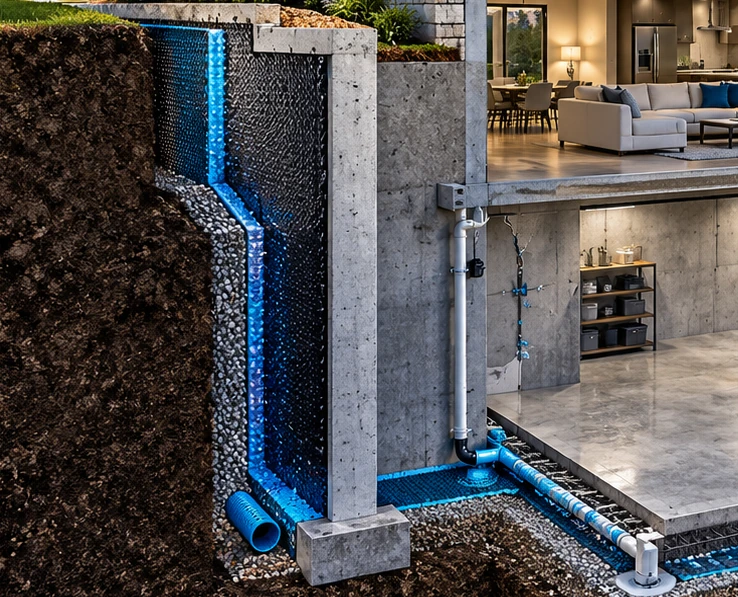
Surface runoff and groundwater are related, but they are not identical. A driveway can send water toward a door while saturated soil creates pressure below grade. Building Science Corporation separates surface drainage, below-grade drainage, and control of moisture moving through porous materials because each addresses a different part of the problem. [2]
From a safe, accessible position, note overflowing gutters, downspouts ending near walls, pooled water beside patios, or soil that appears to fall toward the home. Do not climb a roof or enter an excavation to collect evidence. A short video taken from a window can be more useful than a risky close-up.
Treat the observations as a map. Mark the wet interior area on a simple floor plan, then label the corresponding exterior wall. Add doors, window wells, downspouts, retaining walls, and hardscapes. This makes a complicated house easier to discuss without knowing construction terminology.
Record the timing of the leak
Keep a short event log: date, approximate start of rain, when you noticed moisture, where it appeared, and whether any existing pump was operating. Note whether the room dries between events or stays damp. Do not rely on a memory of the single worst storm.
For example, compare two hypothetical observations. Water flowing under an exterior door during a downpour suggests a different investigation from water emerging along the slab edge after a prolonged wet period. Neither observation proves a diagnosis. Both help direct the next questions.
Include changes you made recently. A new patio, relocated downspout, landscaping work, or basement finishing project may be relevant context. A clear timeline helps an assessor decide what to examine first; it does not mean the most recent contractor necessarily caused the leak.
Understand what a proposed repair is supposed to do
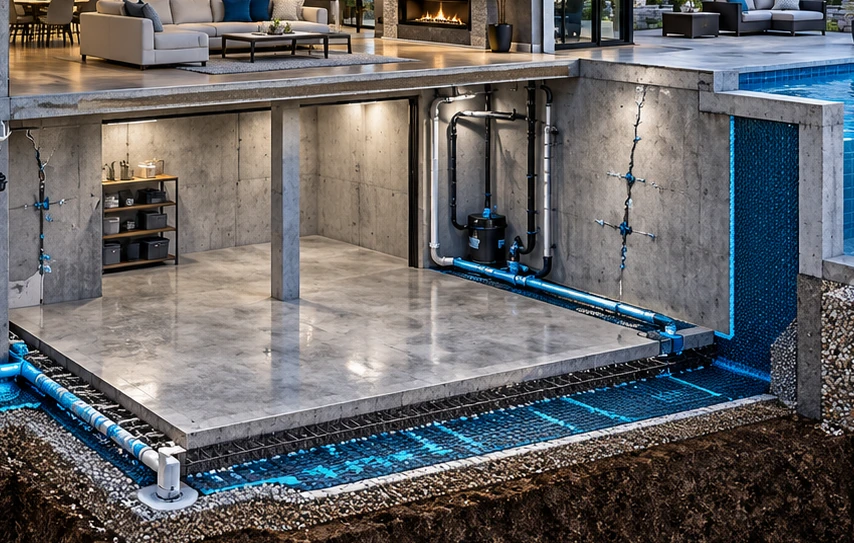
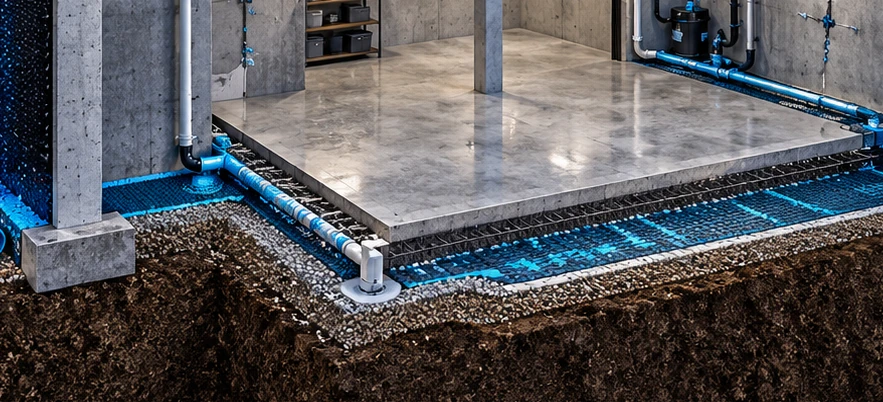
Ask the contractor to explain the route of the water and the function of every proposed element. Is the plan intercepting surface runoff, draining water near the footing, sealing a specific opening, or adding protection to the exterior wall? Several approaches may be combined.
The Building America Solution Center emphasizes grading and drainage that move water away from the foundation, including alternatives where a site's geometry limits grading. That is a reason to examine the whole perimeter rather than treating the indoor stain in isolation. [3]
A dehumidifier can be useful for humidity, but it is not a substitute for explaining a stream of incoming water. Likewise, a fresh painted surface is not evidence that the source has been resolved. Ask how the completed work will be checked, what remains outside scope, and what maintenance you will be responsible for.
Bring a useful evidence pack
Prepare wide photos of the room and close photos of the affected surface. Include a sketch of the location, the event log, known previous repairs, and any available plans. Take photos before covering or repainting a stain. Only move belongings when it is safe to do so.
Ask for an explanation you can repeat in one sentence: “This system collects water at this location and carries it to that discharge point.” If the explanation stays vague, request a drawing or written clarification before comparing prices.
Your next step
Start with our foundation leak service when water is appearing around below-grade walls. The French drain versus trench drain guide explains two frequently confused drainage approaches. You do not need to select a system before speaking with the team. Bring the pattern; let the assessment establish the scope.
Before your next conversation
A little preparation goes a long way.
0 of 4 items noted · This checklist stays in this page.
Sources & further reading
Technical background comes from the resources below. Manufacturer guidance is system-specific and does not imply a brand partnership or suitability for every project. Sources checked September 17, 2026.
- CDC — Safety Guidelines: Reentering Your Flooded Home ↗
- Building Science Corporation — Groundwater Control, Info-101 ↗
- Building America Solution Center — Final Grade Slopes Away from Foundation ↗
This guide is not a property diagnosis, structural assessment, product specification, or substitute for applicable professional guidance. Project conditions, manufacturer instructions, and local requirements must be evaluated for the actual work.